

WESTERN GOVERNORS UNIVERSITY
MHA vs. MBA Healthcare Administration
SCHOLARSHIPS AVAILABLE
Learn more about WGU, and apply for a Sage Scholarship.
MBAHA or MHA: Which Healthcare Leadership Degree Fits Your Future?
WGU offers two powerful ways to lead in healthcare. One is a business-first MBA with a healthcare application. The other is a healthcare-first degree focused on system operations. This page will help you decide which is right for you.
MBA in Healthcare Administration (MBAHA)
A business-first MBA that teaches strategy, finance, and operations, and shows you how to apply those skills in healthcare organizations. Ideal if you want cross-industry mobility and executive-level business leadership.
Master of Healthcare Administration (MHA)
A healthcare-immersive degree focused on health system operations, quality, compliance, and population health. Ideal if you want to stay fully rooted in healthcare delivery leadership.

Which One Sounds More Like You?
MBAHA
- You want an MBA that is portable across industries.
- You enjoy thinking about financial performance, operations, and strategy.
- You’re considering roles in operations, strategy, consulting, or innovation within healthcare.
- You want the flexibility to grow into leadership roles beyond healthcare if your career evolves.
MHA
- You want to stay deeply embedded in hospital, clinic, or health system operations.
- You’re passionate about quality, patient safety, compliance, and population health.
- You see yourself managing clinical workflows, programs, or service lines from the inside.
- You’re committed to a career rooted within healthcare service delivery.
MBA in Healthcare Administration (MBAHA)
Master of Healthcare Administration (MHA)
FOCUS
Business leadership with a healthcare application
Healthcare systems leadership and operational excellence
TOPICS
- Business strategy, finance, operations, marketing
- Data-driven decision-making and organizational leadership
- Healthcare-specific courses in service line development, health system strategy, and performance leadership
- Healthcare policy, law, ethics, and regulation
- Quality, patient safety, and risk management
- Healthcare analytics and data interpretation
- Population health and health systems transformation
OUTCOMES
Executive business acumen with healthcare applications
Healthcare operations and systems leadership
MBA in Healthcare Administration (MBAHA)
Master of Healthcare Administration (MHA)
FOCUS
Business leadership with a healthcare application
FOCUS
Healthcare systems leadership and operational excellence
TOPICS
- Business strategy, finance, operations, marketing
- Data-driven decision-making and organizational leadership
- Healthcare-specific courses in service line development, health system strategy, and performance leadership
TOPICS
- Healthcare policy, law, ethics, and regulation
- Quality, patient safety, and risk management
- Healthcare analytics and data interpretation
- Population health and health systems transformation
OUTCOMES
Executive business acumen with healthcare applications
OUTCOMES
Healthcare operations and systems leadership
What Can I Do With an MBAHA?

- VP of Operations (Healthcare or other industries)
- Hospital or Clinic Business Director
- Strategy or Innovation Leader
- Healthcare Consultant
- CFO or Financial Director in health systems
- Business roles in insurance, biotech, or health-tech
What Can I Do With an MHA?

- Hospital Administrator
- Director of Clinical Services
- Quality or Compliance Manager
- Population Health Director
- Behavioral Health Operations Leader
- Community Health Program Director
Still Not Sure? Ask Yourself This:
Do I want an MBA that gives me business leadership skills I can use in any industry—starting with healthcare?
If yes, the MBAHA is likely your best fit.
Do I want a healthcare administration degree that builds my industry expertise and keeps me centered in hospital, clinic, and health system operations for my healthcare career?
If yes, the MHA may be the right choice.
Why WGU?

Be Career Ready
Designed with input from industry leaders, our accredited programs give you the skills and credentials today’s employers need. That’s why 81% of employers said they’d hire another WGU grad.1
1: 2024 Harris Poll

Get and Keep the Job You Want to Have
84% of WGU graduates are employed in their degree fields—and 86% are employed full-time.2
2: 2024 Harris Poll

Save Money
Average annual tuition and fees for undergraduates at WGU is $8,300 compared to $17,709 at comparable institutions. For graduate students at WGU, average annual tuition and fees is $8,856 compared to $20,513 at comparable institutions.3
3: Source: Analysis of IPEDS data, report year 2023

Work as You Need While Going to School
At WGU, you can complete courses, take tests, and graduate on your schedule. In fact, many of our students work full-time while earning their life-changing bachelor’s or master’s degrees.
"Take the time to invest in yourself and develop new skills and knowledge. Going back to school to get my B.A. and MBA was one of the best decisions I made. I have no regrets over my decision to invest in myself and further my education. Plus, I did not have any student debt after graduation with WGU keeping tuition so affordable."
—Sandra Barber
MBA
Prepared for Success on the Job
*From a 2024 Harris Poll of 300 employers of WGU graduates.

100% of employers said that WGU graduates were prepared for their jobs.*
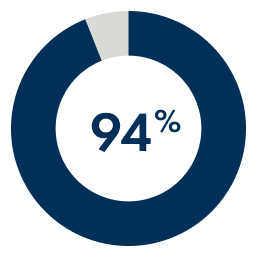
94% of employers said WGU graduates meet or exceed expectations*
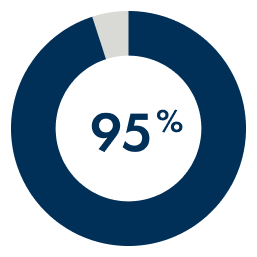
95% of employers rated the "soft skills" of WGU grads as equal to or better than graduates from other institutions*