
What Is Culturally Responsive Teaching?


Students bring a wealth of experience and their own special kind of knowledge to every classroom, even as they’re learning new skills and having experiences they’ve never had before. Culturally responsive teaching honors this uniqueness in every student by encouraging teachers to be more intentional in their pedagogy. Rather than viewing cultural differences as barriers, culturally responsive educators recognize students’ identities, prior knowledge, and cultural backgrounds as strengths they can build on.
Teachers can draw from their students’ languages, culture, and life experiences to build a curriculum that resonates with their class on a deeper level. That might include incorporating texts by authors from different cultures, using familiar real-world examples to explain new concepts, or inviting students to connect lessons to their own experiences.
This approach is especially important for students of color and students of diverse backgrounds, whose experiences don’t often get the spotlight in the classroom. By embracing culturally responsive teaching, teachers can create a multicultural classroom environment that helps students feel empowered and supported while they develop their academic skills.
Culturally responsive teaching is not about celebrating holidays or adding diverse books to a reading list. It is an ongoing approach to responsive education that influences curriculum, instruction, assessment, classroom relationships, and the expectations that teachers set for every student.
What Are the Principles of Culturally Responsive Teaching?
The development of culturally responsive teaching is closely connected to the work of several influential education researchers.
In the 1990s, education scholar Gloria Ladson-Billings introduced the concept of culturally relevant pedagogy after studying teachers who had found effective methods to support Black students. She identified three important goals: helping students (1) achieve academic success, (2) develop and maintain cultural competence, and (3) build the ability to recognize and challenge inequities.
Scholar Geneva Gay later helped define and popularize the term culturally responsive teaching. Her work emphasizes using students’ cultural knowledge, prior experiences, communication patterns, and perspectives to make learning more meaningful and effective.
Other researchers, including Django Paris, have expanded the conversation through the idea of culturally sustaining pedagogy, which seeks not only to recognize students’ cultures but also to help them sustain their languages and cultural identities.
Although the terminology varies, culturally responsive, culturally relevant, and culturally sustaining approaches share several important principles:
- Asset-based thinking: Teachers recognize the knowledge, language, relationships, and experiences students bring to school as valuable resources.
- High expectations: Educators communicate that every student is capable of meaningful academic growth and provide appropriate support to help them succeed.
- Strong relationships: Teachers take time to learn about their students, families, communities, interests, and goals.
- Relevant instruction: Lessons connect academic concepts to students’ experiences without reducing individuals to cultural stereotypes.
- Student voice: Learners have meaningful opportunities to ask questions, make choices, share perspectives, and contribute to the classroom.
- Critical reflection: Teachers examine how their own assumptions and biases may influence their decisions, expectations, and interactions.
- Inclusive materials: Curriculum materials represent people from different cultures as complex individuals, leaders, creators, and problem-solvers.
- Flexible teaching methods: Educators use multiple ways to explain concepts, encourage participation, and assess understanding.
Responsive teaching is more than a set of isolated activities. It is a continual process of listening to students, evaluating what is and is not working, and adjusting instruction accordingly.
Both current and future teachers can consider which teaching practices best fit their goals and how the grade level they choose to teach may influence the ways they apply these principles.
How Does Culturally Responsive Teaching Work with Other Teaching Styles?
While culturally responsive teaching is an important educational framework, it is not a replacement for every other learning theory or instructional method. This method is meant to sit alongside and complement other teaching strategies and learning styles already present in the classroom. Educators do not need to choose only one approach.
Culturally responsive teaching can work alongside other educational learning theories, such as cognitive, behavioral, constructivist, humanistic, social, transformative, and experiential learning approaches. The important thing for teachers to remember is to try to create an inclusive educational experience while meeting academic objectives.
For example, a math teacher might use local data when teaching statistics like who uses public transportation in the local community; an English teacher might offer a variety of texts on the same topic; a science teacher might highlight discoveries from a range of cultures. None of this softens the material—it just gives more students a way in.
What Are the Benefits of Culturally Responsive Teaching?
There are many benefits associated with culturally responsive teaching. When it is thoughtfully implemented, it can:
- Build cultural competence in the classroom and beyond.
- Help students feel seen, respected, and empowered.
- Create a more equitable educational experience.
- Encourage teachers to recognize and address personal biases.
- Strengthen relationships among students, teachers, and families.
- Increase student participation and engagement.
- Honor students’ unique identities and allow them to shine.
- Help students connect new material with existing, unique knowledge.
- Prepare students to communicate and collaborate with people from different backgrounds.
- Create a more inclusive classroom environment.
Culturally responsive teaching can also directly benefit academic achievement. The goal of culturally relevant pedagogy is to make rigorous content more accessible by helping students understand why the material matters and how it connects to knowledge they already have—it is not meant to replace the material with cultural activities.
Students may also be more willing to participate, ask questions, and persist through challenging assignments when they trust their teacher and believe their perspectives are valued. However, no single teaching method guarantees a particular academic outcome. Responsive education is most effective when it is paired with strong subject knowledge, clear learning goals, meaningful assessments, and appropriate academic support.
Putting It into Practice
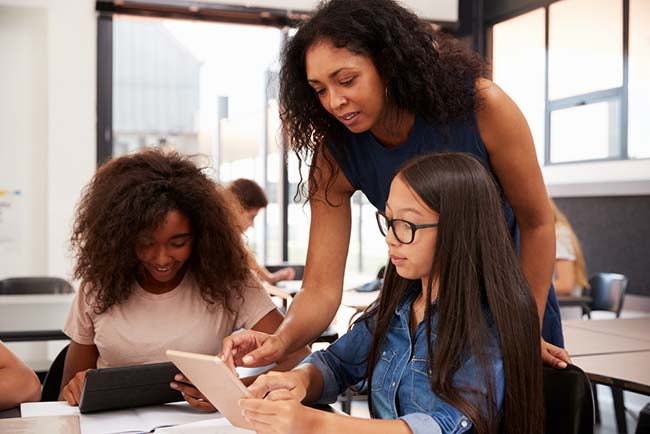
There are a variety of ways teachers can implement culturally responsive teaching in the classroom, including:
- Get to know your students as individuals. Beginning-of-year surveys, conversations, and student journals help—but avoid assuming everyone from a given group shares the same experiences. A person's identity is shaped by far more than any one factor; it's a rich blend of their experiences, backgrounds, and influences.
- Make the classroom feel welcoming. Look at your books, artwork, and examples. Will students see people with a range of backgrounds represented as thinkers, leaders, and professionals? Having several cultural references will help the room feel more inclusive and welcoming.
- Check the curriculum for gaps. Bring in a wider range of perspectives through books, case studies, guest speakers, or documentaries—woven throughout the year, not just saved for a heritage month.
- Link new material to what students already know. Let them draw on their own families, communities, or interests when it’s relevant.
- Offer real choices. Allow students to choose topics, formats, or group roles—while keeping assignments focused on learning outcomes.
- Mix up how students participate. Small groups, written reflection, visual work, and structured turn-taking give more students a chance to engage, not just those comfortable speaking up first.
- Keep expectations high. Pay attention to patterns in who you call on, praise, or flag for extra help—it’s worth checking whether any unconscious biases are shaping those calls.
- Keep learning. Learning about cultural competence isn’t a one-time training—it’s ongoing.
Educating Parents on Culturally Responsive Teaching
While culturally responsive teaching is one of the more important teaching strategies to help students excel and thrive, it’s equally important that parents reinforce at home the lessons taught in the classroom. Teachers can share their approach with parents and invite their input—books, community connections, or family stories can enrich the curriculum.
Outside of class, parents can visit museums and cultural centers, read diverse authors, and model curiosity about unfamiliar experiences. When parents and teachers work together to support culturally responsive teaching, students can benefit and thrive.
Advancing Your Teaching Career with Culturally Responsive Practices
Learning how to support diverse students can strengthen your classroom instruction and prepare you for a range of opportunities in education. Culturally responsive teaching skills can be valuable for classroom teachers, special education teachers, instructional coaches, curriculum specialists, school leaders, and other education professionals.
WGU’s Teachers College offers online teaching degree programs designed to help aspiring and current educators expand their knowledge and skills. By choosing a program that aligns with your goals, you can earn your degree online while continuing to develop the skills needed to create rigorous, inclusive, and responsive learning environments.
Frequently Asked Questions About Culturally Responsive Teaching
Multicultural education is a broad field focused on equity, representation, diversity, and educational opportunities. It can influence curriculum, school policy, staffing, assessment, and the way educational institutions operate.
Culturally responsive teaching focuses more specifically on how individual teachers design instruction, build relationships, select materials, communicate expectations, and respond to students. The approaches overlap, but culturally responsive teaching is often discussed as a classroom-level practice within the broader goals of multicultural education.
No. Every student has a cultural identity, and everyone benefits from engaging with a range of perspectives—though the approach matters especially for students whose backgrounds have historically been left out of the curriculum.
Culturally sustaining pedagogy is an extension of culturally responsive teaching (associated with Django Paris) that aims to actively sustain students’ cultural and linguistic identities—like supporting multilingualism rather than treating a home language as something to replace.
Get to know students individually, ask rather than assume, and remember that people within the same group can differ widely in belief and experience.


