
Effective Classroom Management Strategies for Teachers

Ask any teacher about their toughest days, and chances are they won’t mention the lesson plans or the grading. They’ll talk about the moments when the room slipped out of their hands—the side conversations that swallowed a lesson, the off-task energy that spread like wildfire, the student who shut down and wouldn’t engage. Classroom management sits at the heart of teaching, and it shapes everything else you do.
But here’s something worth remembering: Managing a classroom isn’t really about controlling student behavior or enforcing a long list of guidelines. At its core, it’s about building relationships. When students feel seen, respected, and supported, they’re far more likely to stay engaged and do their best work. Good classroom management creates the conditions where real learning can happen.
The strategies below will help you build that kind of environment. Some focus on structure and routine. Others focus on connection. Together, they’ll help create a positive classroom where learners feel safe, motivated, and ready to learn.
Set the Right Tone
The tone of your classroom gets established early, often in the first days of the school year. Students are watching closely, trying to figure out what’s expected and how things work. This is your chance to set the foundation.
Start with clear expectations. Students do their best when they understand what’s acceptable and what isn’t. Rather than handing down a long list of dos and don’ts, consider keeping your rules simple and focused on the classroom behaviors that matter most. Positive behaviors should be reinforced whenever possible.
One powerful approach is to involve students in creating the classroom rules. When students help shape the expectations, they feel a sense of ownership over them. A class that agrees together to “listen when others are speaking” or “treat each other with respect” is much more likely to honor those agreements than one that simply had them imposed. You can guide the conversation toward the values you care about while letting students put the ideas into their own words.
Consistency is what makes a classroom culture work. Rules only matter if they’re applied fairly and predictably. If a behavior earns a consequence on Monday, it should earn the same response on Friday. Students notice when expectations shift or when some kids seem to get away with things that others don’t. That inconsistency erodes trust and invites testing.
Setting the right tone also includes the energy you bring. A teacher who greets students warmly, stays positive, and shows genuine enthusiasm for the subject sets a very different mood than one who seems frustrated or checked out. Your attitude is contagious, so use it intentionally.
Have a Clear Plan for Learning Activities
Disruptions often fill the spaces where structure is missing. When students don’t know what comes next or how to do a task, that uncertainty creates openings for off-task behavior. A clear plan keeps everyone moving in the same direction.
Think about all the small transitions that happen during a single day:
- Turning in homework.
- Moving into small groups.
- Getting supplies.
- Lining up.
- Wrapping up an activity.
Each of these moments can either run smoothly or dissolve into chaos. When you establish clear routines for them—and practice those routines until they become second nature—you reclaim valuable instructional time and reduce friction.
Map out your lessons so there’s always a next step. As you plan, consider a few key questions:
- What should students do when they finish early?
- How will they know an activity is ending?
- How will they move from one task to another?
Posting an agenda or schedule where students can see it helps them stay oriented throughout the day. When students understand the flow, they spend less time confused and more time learning.
Pacing matters too. Lessons that drag tend to lose students, while lessons that race ahead leave them behind. Aim for a rhythm that keeps things moving without rushing. Build in moments to check whether students are following along, and be ready to adjust if you notice confusion or restlessness.
Preparation is your best friend here. The more thoroughly you plan, the less you’ll be scrambling in the moment. Walking in with a clear roadmap signals that the time together matters and that you’ve got things under control. That confidence puts students at ease and keeps the room focused.
Use Classroom Activities That Promote Participation
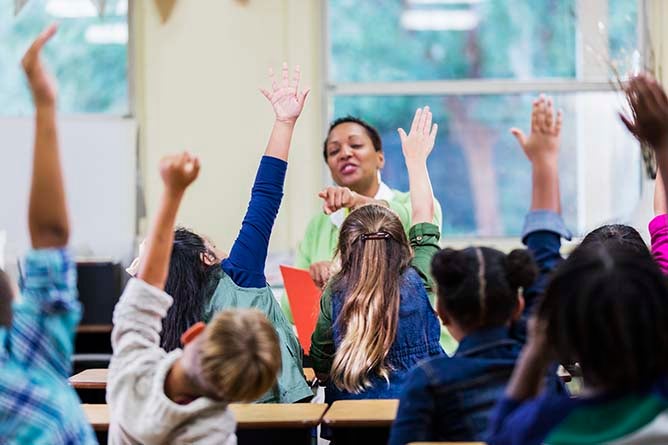
Learning sticks when students do something with what they’re taught. Passive listening only goes so far. The moment students apply a concept (explaining it, debating it, building something, solving a problem), they move from simply hearing information to truly understanding it.
Participation also serves a classroom management technique . Engaged students are far less likely to drift off task. When you give everyone a meaningful role in the activity, you crowd out boredom and the disruptions that often follow it.
There are countless ways to invite participation. Try think-pair-share, where students reflect on a question, discuss it with a partner, and then bring their ideas to the group. Use hands-on projects that let students experiment and create. Bring in group problem-solving challenges, role-plays, quick polls, or short presentations. Even simple moves, such as asking students to summarize a point in their own words or to give a thumbs-up or thumbs-down, pull them into the learning.
Pay attention to the quiet learners. It’s easy for a few confident voices to dominate while others fade into the background. Strategies like calling on an individual student with care, using small groups, or offering written response options give every student a chance to contribute. When students know they might be asked to share, they tend to stay more attentive.
The goal is a classroom where students are active participants in their own learning rather than spectators. When students feel they have something to offer and a stake in what’s happening, engagement rises and management challenges tend to shrink on their own.
Remember That Students Bring Different Experiences to Class
Every student who walks into your room carries a whole world with them: Their family life, their culture, their struggles, their strengths. No two students experience the classroom in exactly the same way. The more you keep this in mind, the more effective and compassionate your teaching becomes.
How You Treat Students Matters
Students remember how you make them feel. A kind word, a moment of patience, or a show of belief in their ability can stay with a student long after the lesson is forgotten. The opposite is also true: Harsh treatment, public embarrassment, or dismissiveness can leave lasting marks and shut a student down.
Treating students with respect and fairness isn’t just the decent thing to do—it’s also good behavior management. Students who feel respected are more willing to cooperate, take risks, and meet your expectations. When you respond to mistakes with patience instead of frustration, you teach students that the classroom is a safe place to learn and grow.
You Don’t Know Every Kid’s Home Life
When a student arrives tired, distracted, or irritable, it’s tempting to read it as defiance or laziness. But you rarely know the full story. A student might be dealing with hunger, family conflict, a tough home situation, or worries that have nothing to do with your class. The behavior you see in the room is often just the tip of something much larger.
This doesn’t mean lowering your standards or excusing every disruption. It means leading with curiosity and compassion before judgment. Instead of assuming the worst, you might quietly check in: “You seem a little off today. Is everything okay?” That small gesture can change the course of a student’s day, and it can reveal what’s really going on. When you give students the benefit of the doubt, you build trust that pays off in the long run.
Your Connection to Your Students Might Surprise You
Don’t underestimate the impact you have. For some students, you may be one of the most stable, caring adults in their lives. The relationships you build can reach far beyond academics. A teacher who takes a genuine interest in a student—who remembers their interests, cheers their progress, and shows up consistently—can become a turning point in that young person’s story.
These connections often come back to you in unexpected ways. The student who seemed indifferent may surprise you with sudden effort once they feel you’re in their corner. The tough kid may turn into one of your strongest allies. Years later, a former student might tell you that your class was the place they felt they belonged. Investing in relationships isn’t a distraction from teaching—it’s one of the most powerful tools you have for reaching every student.
Save Time for a Strong Finish
How you end a lesson is just as important as how you begin it, yet the closing minutes are often the first thing to get squeezed out. When the bell catches you mid-thought, students leave with loose ends and the learning never quite lands. A strong finish ties everything together.
Build a few minutes into every lesson for a deliberate wrap-up. This is your chance to reinforce the key takeaways, answer lingering questions, and help students connect the dots. A quick closing routine can do a lot of work. Try one of these simple moves:
- Ask students to name one thing they learned.
- Have them write a brief reflection.
- Invite them to share an answer with a partner.
These exit moments help cement the material and give you a read on what students actually absorbed.
A clear ending also keeps your classroom calm and orderly. Rushing to clean up and pack away supplies in a frantic last thirty seconds invites chaos. When you reserve time to transition smoothly, students leave the room settled rather than scattered. That sense of closure carries into the next class and into how students feel about your room overall.
Explore WGU’s Teaching Degrees
Great classroom management is a skill you build over time, and the right preparation makes a real difference. Whether you’re just starting your journey into education or you’re a working teacher ready to deepen your expertise, WGU offers flexible, affordable degree programs designed with your goals in mind.
WGU’s School of Education offers a wide range of accredited education degrees—from initial licensure programs for aspiring teachers to advanced degrees for experienced educators looking to grow. The competency-based learning model lets you study around your schedule, which is ideal if you’re already balancing work, family, and a calling to teach. You’ll gain practical, classroom-ready strategies alongside the credentials you need to advance your career.


