

UNIVERSITY GOVERNANCE
Chief Academic Officer
Meet Dr. Courtney Hills McBeth
Courtney Hills McBeth has served as Western Governors University's chief academic officer and provost since January 2024. In this role, she leads WGU’s schools of business, education, health, and technology and is responsible for program development, accreditation, and mentoring.
Previously, she was senior vice president at Strada Education Foundation, promoting equitable outcomes in postsecondary education. McBeth’s career began at the University of Utah, where her leadership roles involved strategic planning and innovation efforts at the Hinckley Institute of Politics, the Eccles School of Business, and the Sorenson Impact Institute. In the president’s office at the U of U, McBeth led university-wide strategic planning, presidential initiatives, and innovation efforts.
McBeth earned a doctorate degree from the University of Pennsylvania, and master’s and bachelor’s degrees from the U of U.
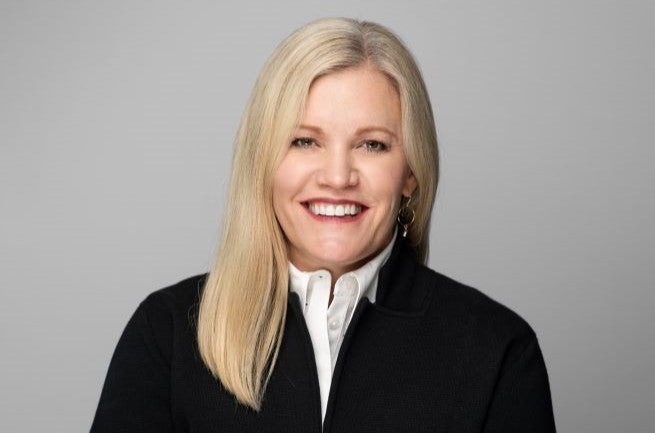
"WGU has made a bold commitment to empower every student with a personalized, affordable, and career-advancing postsecondary education. WGU is uniquely poised to equip students to thrive in today’s rapidly evolving workforce.”
—Dr. Courtney Hills McBeth
Chief Academic Officer and Provost
Meet the University's School Leadership Team

Paul Bingham
Executive Dean and Senior Vice President, School of Technology

Dr. Jeff D. Borden
Executive Dean and Senior Vice President, School of Education

Dr. Mitsu Frazier
Executive Dean and Senior Vice President, School of Business

Dr. Ryan Gates
Executive Dean and Senior Vice President, Michael O. Leavitt School of Health
David Perkinson
Senior vVce President
Program Development
Debra Tervala, associate vice provost, Accreditation, Compliance & Policy
Malika Clinkscales
Vice President
University Mentor Strategy & Operations
Adam Shiflett
Vice President
Student Experience
Troy Davis
Vice President
University Technology
Stacey Ludwig Johnson
Executive Director
Work-based Pathways
WGU and Skills
WGU places skills at the center of how learning connects to work. Skills provide a common language across education and employment. When they are clearly defined, measured, and validated, they help students move more easily from learning to earning. WGU’s approach focuses on three priorities:
Clarity
With WGU’s competency-based approach to education, programs are built around specific, measurable skills. Students know what they are expected to demonstrate, and employers understand what graduates can do.
Alignment
Skills are mapped to industry-recognized frameworks and standards. This ensures coursework reflects current job requirements and evolving workforce needs.
Verification
Skills are assessed through performance-based evaluations. Students show what they can do, not just what they know. This strengthens credential integrity and builds employer trust.
WGU uses verified frameworks such as national occupational standards and employer-informed competency models. These frameworks are regularly reviewed and updated to keep pace with changes in technology, roles, and industry expectations.
For students, clear skill pathways improve confidence, reduce guesswork, and support faster career entry or advancement. For employers, transparent skill validation makes it easier to identify qualified candidates and reduce hiring risk. Learn about the WGU Achievement Wallet.
Learn more about WGU’s research on skills and our skills-based approach to education that matches today’s workforce demands:
In the News
Featured
Other Media
Dr Courtney Hills McBeth, Chief Academic Officer and Provost, Western Governors University
Reimagining HigherEd
Same Model, Same Values, Different Approaches: How Calbright and WGU use Competency-based Education to Expand Options for Students
The Rant podcast, January 27, 2026
Views on College and Alternative Pathways
The Chronicle of Higher Education, Virtual Forum, June 10, 2025
How WGU Celebrates 50,000+ Graduates a Year
The Liminal Podcast, February 16, 2025
Growing and Evolving Pathways for Educating Teachers
Future U podcast, October 29, 2024
Expanding Educational Access to Build a Skilled Workforce
Illumination podcast by Modern Campus, June 13, 2024
Holistic Support must be the commitment
Deseret News, March 20, 2026
Education Revolution: Innovative Approaches that are Transforming Education
Authority Magazine, Nov. 27, 2025
Turning Career Goals into Reality through Credentials
The EvoLLLution, May 14, 2025
To truly boost our workforce, Utah must embrace work-based learning pathways
The Salt Lake Tribune, November 23, 2024
At WGU, we provide a personalized career pathway that meets workforce needs
Deseret News, May 22, 2024
Making College Work—For Everyone
Providing access to higher education for populations from aspirational communities is the first step toward closing the opportunity gap and ensuring our collective well-being. These populations include students from historically underrepresented racial and ethnic groups, low-income families, rural locations, and/or families in which they are the first to attend college. According to self-reporting at the time of enrollment, 73% of WGU’s students come from at least one of these communities.*
*Source: Annual Report

Graduation Is The Goal
Access without attainment does not deliver on the promise of higher education. To measure whether we're expanding access, we must measure growth in credentials earned.
Source: Annual Report

Recognized for Innovation
Since its inception, WGU has been at the cutting edge of innovation in higher education. Our employees take pride in making a difference for students by delivering high-quality, flexible programs at scale. We design courses with a clear focus on market relevance. Programs are built with input from industry partners to align skills with workforce needs. This ensures students gain knowledge they can apply immediately in their careers. Our competency-based model allows students to progress by demonstrating what they know. We continue to invest in innovation to expand access and support economic mobility for more learners. This work led to WGU being named a 2025 Opportunity College and University by the American Council on Education and the Carnegie Foundation.


WGU Councils
As a competency-based education institution, the core of our practice is demonstrating subject mastery through assessments, rather than time spent in a class. To maintain WGU's credential value and institutional quality, we partner with our Assessment & Institutional Effectiveness Advisory Council, a body of national experts who help us advance innovation, integrity, and continuous improvement across two interconnected areas: assessment and evaluation practices, and institutional effectiveness and accreditation.
Randy Bennett
Norman O. Frederiksen Chair in Assessment Innovation
ETS
Ph.D., Columbia University
Peter Ewell
Vice President
National Center for Higher Education Management Systems (NCHEMS)
Ph.D., Yale University
Brian Gong
Executive Director
Center for Assessment
Ph.D., Stanford University
Neal Kingston
Distinguished Professor in Educational Psychology,
Director Achievement and Assessment Institute
University of Kansas
Ph.D., Columbia University
Sue Lottridge
Chief Scientist
Natural Applications at Cambium Assessment
Ph.D., James Madison University
Ric Luecht
Professor of Education Research Methodology
University of North Carolina at Greensboro
Ph.D., University of Wisconsin - Milwaukee
Liberty Munson
Director of Psychometrics
Microsoft
Ph.D., University of Illinois - Urbana-Champaign
Maria Elena Oliveri
Research Associate Professor
Purdue University College of Engineering
Ph.D., University of British Columbia
Charles DePascale
Educational Consultant
Psychometric Confections LLC
Ph.D., University of Minnesota
Brent James, M.D., M Stat
CMedical Quality Guru
Quality Science
Cliff Rotenberg, MBA
Managing Director
Golden Dome Associates
Dallas Ducar, MSN, RN, PMHNP-BC, CNL
CEO
Transhealth Northhampton
Geoffrey Roche, MPA
Industry Lead
National Health Care Practice
Jan Jones-Schenk, D.HSc, RN, FAADN, FAAN
Executive Dean Emeritus
WGU
Marcus Osborne, MBA
Chief Executive Officer
RightMove Health
Michelle Edwards, DNP, FACHE, FAANP
Chief Experience Officer
Providence
Mike Leavitt
Former HHS Secretary
Governor of Utah
Dr. Richard Walker Jr., MD, MBA
Founder & CEO
Walker Health Care Holdings, Inc, TVP-CareLLC, and Canopy Health
Donna Meyer, MSN, RN, ANEF, FAADN, FAAN
Inaugural CEO
Organization for Associate Degree Nursing (OADN)
Joseph Berumen, DNP, RN, CCRN-K, NEA-BC
Chief Nursing Officer
Medical City Las Colinas
Kim Hedley, Ph.D., RN, CPHQ
Health Sciences Division Chair and Associate Professor
Sunny Adirondack
Tina Livaudais
CNO
DaVita Kidney Care
Martin Carmichael
Managing Director, Business Information Security Officer
MUFG Americas
Chakib Chraibi
Chief Data Scientist, National Technical Information Service, U.S. Dept. of Commerce
Ph.D., Binghamton University
Mischel Kwon
Founder and CEO
MKACyber
M.S., Marymount University
Kumud Majumder
Sr. Vice President (Global SME Manager - Corporate Technology Officer)
CitiGroup, NYNJ
Ph.D., Indian Institute of Science, Bangalore, India
David W. Ricker
Associate Director of Data Warehousing and Business Intelligence
Dartmouth College
M.A., John Carroll University
Jennifer Carinci
Program Director, STEM Education Research
American Association for the Advancement of Science
John Conyers
President
Conyers & Associates
Lynn Gangone
President & CEO
AACTE
Cassandra Herring
President & CEO
Branch Alliance for Educator Diversity
Richard Lesh
Emeritus Rudy Distinguished Professor of Learning & Cognitive Sciences
Indiana University
Gary Natriello
Ruth L. Gottesman Prof. in Educ. Research
Columbia University
Wil Del Pilar
Vice President for Higher Education
The Education Trust
George Ann Rice
Planning Team Member
Troops to Education
Darlene Robles
Professor of Clinical Education
University of Southern California Rossier School of Education
Phil Rogers
Executive Director & CEO
NASDTEC
Michelle Weise
SVP, Workforce Strategies
Strada Education Network
Lyle Ailshie
Former Education Chief
Tennessee Department of Education
Michael Dunn
Superintendent
NEW ESD 101
Jim Gay
Co-Director
OLAC Project
Jeanette Jenkins
Secondary Mentoring
Davis School District
John Pruette
Executive Director
DPI
Chris Templeton
Superintendent
Willard School District


