
OVERVIEW
What is a Forensic Nurse?
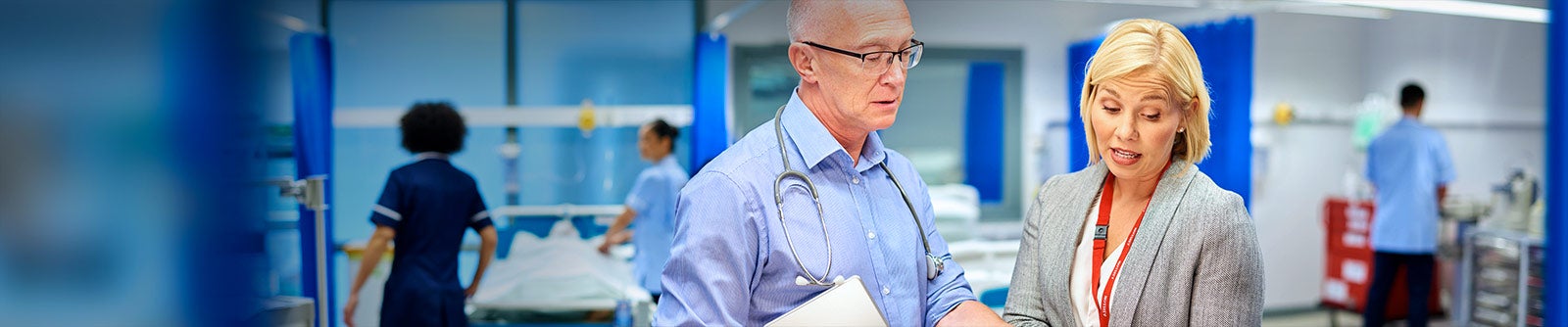
Forensic nursing is one of the few careers where clinical care meets the justice system, giving nurses the chance to support patients during some of the most difficult moments of their lives. For those drawn to trauma-informed care, advocacy, and investigative work, this path offers a powerful opportunity to make a real and lasting impact.
A forensic nurse is a registered nurse who cares for patients involved in trauma, violence, abuse, neglect, or other situations that may involve the legal system. These nurses provide medical care while also documenting injuries, collecting evidence, and supporting investigations when needed.
Forensic nurses work at the intersection of nursing and law. Their role focuses on patient health and safety first, but they also help preserve facts that may be important in criminal or civil cases. Because of this, they need strong clinical skills, attention to detail, and the ability to remain calm in sensitive situations.
Some forensic nurses specialize in areas such as sexual assault examination, death investigation, child abuse, intimate partner violence, or psychiatric forensic care.

RESPONSIBILITIES
What Does a Forensic Nurse Do?
A forensic nurse’s duties vary by setting and specialty, but they often:
- Assess and treat patients who have experienced violence, assault, abuse, or trauma
- Document injuries carefully and accurately
- Collect, preserve, and label forensic evidence
- Perform detailed patient interviews related to medical and legal concerns
- Provide crisis support and emotional care
- Work with law enforcement, attorneys, social workers, and victim advocates
- Testify in court when their documentation or findings are part of a case
- Help identify signs of abuse, neglect, trafficking, or interpersonal violence
- Follow strict chain-of-custody procedures for evidence
- Educate patients about treatment options, reporting choices, and community resources

EDUCATION & BEST DEGREES
How Do I Become a Forensic Nurse?
If you want to become a forensic nurse, follow these steps:
1. Earn a nursing degree
Start by completing an approved nursing program. You can choose:
- Associate Degree in Nursing (ADN), which is often the faster path
- Bachelor of Science in Nursing (BSN), which may offer broader training and stronger long-term career options.

2. Pass the NCLEX-RN exam
After finishing nursing school, you must pass the NCLEX-RN to become a licensed registered nurse. This exam tests whether you are prepared for safe entry-level nursing practice.
3. Obtain RN licensure in your state
Once you pass the NCLEX-RN, apply for licensure through your state board of nursing. You must keep your license active and meet any continuing education requirements set by your state.
4. Gain hands-on clinical nursing experience
Most forensic nursing roles require real-world experience as an RN. Working in areas such as emergency care, trauma, critical care, women’s health, or mental health can help you build the assessment and patient care skills this field demands.
5. Complete forensic nursing training
To move into this specialty, pursue formal forensic nursing education or employer-based training. Programs may cover:
- Evidence collection
- Injury documentation
- Trauma-informed care
- Legal and ethical issues
- Courtroom preparation
- Abuse and violence assessment
6. Consider SANE training and certification
If you want to work with sexual assault survivors, you may need sexual assault nurse examiner (SANE) training. This is one of the most recognized paths within forensic nursing.
There are two common SANE certification areas:
- SANE-A for adolescent and adult patients
- SANE-P for pediatric patients
These certifications are typically offered through the International Association of Forensic Nurses (IAFN) after meeting education and clinical practice requirements.
7. Pursue advanced certification if appropriate
As your career grows, you may pursue additional forensic or advanced nursing credentials based on your specialty and employer expectations. Certification can strengthen your qualifications and show commitment to the field.
SKILLS
What Skills Does a Forensic Nurse Need?
Forensic nurses need a mix of clinical, communication, and legal-awareness skills. Important skills include:
- Strong patient assessment skills
- Careful attention to detail
- Clear written documentation
- Evidence collection and preservation skills
- Knowledge of trauma-informed care
- Compassion and empathy
- Emotional resilience
- Critical thinking
- Strong communication and interviewing skills
- Ability to stay calm under pressure
- Understanding of legal and ethical standards
- Teamwork and collaboration
- Cultural sensitivity
- Professional judgment
Best Degrees for a Forensic Nurse
 Health & Nursing
Nursing (Prelicensure) – B.S.
A one-of-a-kind nursing program that prepares you to be an RN and a...
A one-of-a-kind nursing program that prepares you to be an RN and a baccalaureate-prepared nurse:
- Locations: Due to in-person clinical requirements, students must be full time residents of Arkansas, Florida, Idaho, Indiana, Iowa, Kansas, Kentucky, Michigan, Minnesota, Mississippi, Missouri, Nebraska, Nevada, New Mexico, Ohio, Oklahoma, South Carolina, South Dakota, Tennessee, Texas, Utah, Virginia, West Virginia, or Wisconsin to enroll in this program. The coursework in this program is offered online, but there are in-person requirements.
- Tuition: $8,755 per 6-month term for the first 4 terms of pre-nursing coursework and $8,755 per 6-month term for the remaining 4 terms of clinical nursing coursework.
- Time: This program has a set pace and an expected completion time of 4 years. Certain coursework may be accelerated to finish faster.
- WGU offers the prelicensure program in areas where we have partnerships with healthcare employers to provide practice sites and clinical coaches to help teach you and inspire you on your path to becoming a nurse.
- If you don't live in one of our prelicensure states or don't qualify to apply, consider getting our Bachelor's in Health and Human Services instead. This degree allows you to work inside the healthcare industry, while also working directly with patients who need help.
Skills for your résumé that you will learn in this program:
- Community Health
- Women's and Children's Nursing
- Pathology
- Physiology
- Research
Health & Nursing
Nursing (RN-to-BSN Online) – B.S.
An online BSN degree program for registered nurses (RNs) seeking the added...
An online BSN degree program for registered nurses (RNs) seeking the added theoretical depth, employability, and respect that a bachelor's degree brings:
- Time: The program is designed to be completed in 1 year.
- Tuition: $5,325 per 6-month term.
- Courses: 23 total courses in this program.
- Transfers: Students can transfer up to 90 credits.
Skills for your résumé that you will learn in this program:
- Healthcare Policy and Economics
- Information Technology in Nursing Practice
- Anatomy and Physiology
- Applied Healthcare Statistics
If you don't currently have an RN and don't qualify for your nursing prelicensure program, consider getting our Bachelor's in Health and Human Services instead. This degree allows you to work inside the healthcare industry in a unique way.
Health & Nursing
Nursing – Leadership & Management (RN-to-MSN) – M.S.
This program for RNs includes a BSN component and is a substantial leap...
This program for RNs includes a BSN component and is a substantial leap toward becoming a nurse leader.
- Time: 62% of RN-to-MSN grads finish within 37 months.
- Tuition: $5325 per 6-month term during undergraduate portion and $5050 per 6-month term during graduate portion.
- Courses: 32 total courses in this program.
Skills for your résumé you will learn in this program:
- Quality Outcomes in a Culture of Value-Based Nursing Care
- Nursing Leadership and Management
- Advanced Pathopharmacological Foundations
- Informatics for Transforming Nursing Care
If you're driven to lead, this online nursing degree will provide you everything needed to make that career a reality. This program is ideal for current RNs who are interested in earning both their BSN and MSN in an accelerated program.
Compare degrees
This program is not the only degree WGU offers designed to create leaders in the field of healthcare. Compare our health leadership degrees.
Health & Nursing
Nursing – Leadership & Management (BSN-to-MSN) – M.S.
For registered nurses with a bachelor's degree who are ready for...
For registered nurses with a bachelor's degree who are ready for additional career opportunities.
- Time: 61% of grads finish within 23 months
- Tuition: $5050 per 6-month term
- Courses: 15 total courses in this program
This program is ideal for current RNs who have a BSN and are ready for the next step in their education.
Skills for your résumé you will learn in this program:
- Quality Outcomes in a Culture of Value-Based Nursing Care
- Nursing Leadership and Management
- Advanced Pathopharmacological Foundations
- Informatics for Transforming Nursing Care
Compare degrees
This program is not the only degree WGU offers designed to create leaders in the field of healthcare. Compare our health leadership degrees.
Health & Nursing
Nursing Leadership and Management – Post-Master's Certificate
A certificate for registered nurses with a master's degree in nursing who...
A certificate for registered nurses with a master's degree in nursing who are ready for greater responsibility in a leadership and management role.
- Time: Students typically finish this program in 12 months.
- Tuition: $5050 per 6-month term. The cost to sit for the NAHQ Certified Professional in Healthcare Quality (CPHQ) exam is included in tuition.
- Courses: 8 total courses in this program.
Skills for your résumé that you will learn in this program:
- Strategic Planning
- Resource Management
- Business Case Analysis
- Evaluating Healthcare Improvements

How Much Does a Forensic Nurse Make?
(((forensic_nurse.averageSalary)))
According to the U.S. Bureau of Labor Statistics (BLS), the median annual wage for registered nurses, including forensic nurses, was (((forensic_nurse.averageSalary))) in May 2024.
Actual forensic nurse salaries can vary based on factors such as:
- Education level
- Certifications, including SANE training
- Years of nursing experience
- Employer type
- Geographic location
- Shift differentials and on-call responsibilities
What Is the Job Outlook?
(((forensic_nurse.jobGrowth)))
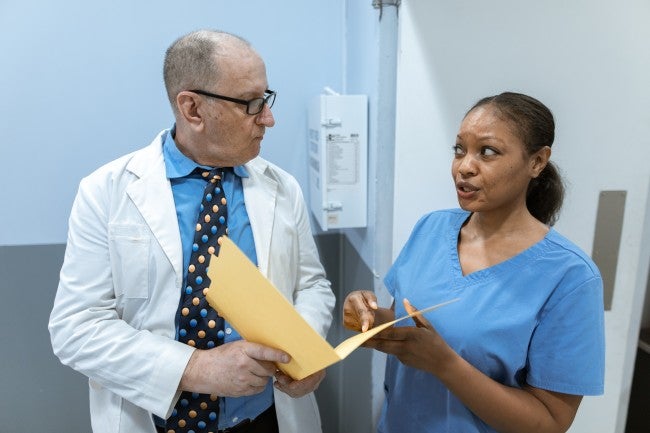
The BLS projects employment of registered nurses to grow by (((forensic_nurse.jobGrowth))) from 2024 to 2034, which is faster than the average for all occupations.
Demand is expected to be supported by several factors, including:
- Ongoing need for healthcare services
- Greater awareness of violence, abuse, and trauma-related care
- The need for trained professionals who can combine patient treatment with forensic procedures
- Growing recognition of trauma-informed services in hospitals and community settings
WORK SETTINGS
Where Does a Forensic Nurse Work?
Forensic nurses work in a range of settings depending on their specialty. Common workplaces include:
- Hospitals
- Emergency departments
- Sexual assault response programs
- Community health clinics
- Child advocacy centers
- Correctional facilities
- Medical examiner or coroner offices
- Psychiatric hospitals
- Domestic violence programs
- Government agencies
- College or university health systems
Frequently Asked Questions
The timeline depends on your education path and how quickly you gain clinical experience. In many cases, it takes about two to four years to become an RN, plus additional time for nursing experience and forensic training. If you pursue a BSN and then complete specialty training such as SANE preparation, the full path may take several years.
A forensic nurse is a broad category that includes nurses who work with patients involved in trauma, violence, abuse, or legal cases. A SANE nurse is a specific type of forensic nurse trained to care for patients who have experienced sexual assault. In short, all SANE nurses are forensic nurses, but not all forensic nurses are SANEs.
Some do, but not all. Most forensic nurses work in healthcare settings such as hospitals or clinics. Certain roles, especially those tied to death investigation or specialized forensic response teams, may involve visiting crime scenes. Whether this is part of the job depends on the nurse’s specialty, training, and employer.
Our Online University Degree Programs Start on the First of Every Month, All Year Long
No need to wait for spring or fall semester. It's back-to-school time at WGU year-round. Get started by talking to an Enrollment Counselor today, and you'll be on your way to realizing your dream of a bachelor's or master's degree—sooner than you might think!
Next Start Date
{{startdate}}
Interested in Becoming a Forensic Nurse?
Learn more about degree programs that can prepare you for this meaningful career.


