
Choosing Collaboration Over Competition in Higher Ed
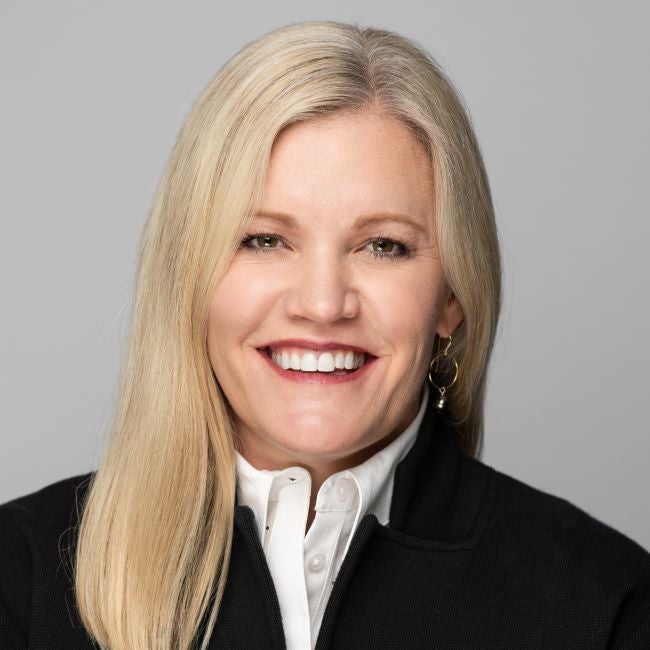
On a recent sunny day in San Diego, in a large white event tent at the ASU+GSV Summit, I joined three other university leaders — all of us women from competing universities — on a panel where we came together to collaborate as academic colleagues.
We know each other and work together because the Gates Foundation has identified our large online universities – WGU, ASU, SNHU, Purdue Global and UMGC – as National Scale Enterprises (NSEs). Combined, our institutions reach hundreds of thousands of students through innovative online and workforce-aligned models.
Collectively, these five NSEs serve more than 700,000 undergraduate students, an increase of more than 30% in the past five years despite a 5% decline in national undergraduate enrollment.
These large-scale universities are growing while the rest of higher education is shrinking. From 2020 to 2024, NSEs outpaced national trends in growth and degrees produced. While national enrollment dropped by almost 3%, NSE enrollment surged by 33%. Nationally, the number of bachelor’s degrees awarded decreased by 4.2%, yet NSEs saw a 27% increase.
And it’s not just growth; it’s who we are serving. During the same period, enrollment of equity-focused students at NSE schools jumped 54%, much faster than overall national growth at other schools.

Bottom line: We are scaling in a way that the broader system is not – and we’re working in alignment.
Although NSE leaders meet several times a year to share initiatives, innovations and learnings, being together in the big white tent at ASU+GSV with an eager-to-learn audience in front of us provided an intimate setting for us to share candidly the “why” behind what we do.
The Real Changemaker: Education
My “why” was that both of my grandmothers were educated only through eighth grade, and my Grandma Fern wanted more for me. She said, “Courtney, get as much education as you can.” I followed her advice, and getting my education opened doors to life-changing opportunities. I experienced firsthand the life-changing impact of learning.
Another panelist shared that her personal motivation was the legacy of access to education across generations; another saw education as a pathway to improve outcomes for underserved communities; and another was motivated by the power of economic mobility to improve and lift entire families.
Despite the institutional scale, our work is deeply human and equity-driven.
As we shared data, ideas and experiences, a real sense of collaborative energy took hold. Although we compete for online students, that didn’t define the conversation. What stood out instead was our shared commitment to improving the student experience and student outcomes. That common purpose was unmistakable, and it naturally led to something more.
When We Collaborate, Students Win
NSEs are not keeping insights to ourselves. We collaborate. And at this inflection point in adult learning, we see it as our responsibility to extend these lessons beyond our own institutions and into the broader higher education community.
WGU closely monitors current data — through Gallup and Harris Polls, Opportunity Insights, the Burning Glass Institute, WGU Labs and others — about learning pathways and the increasing complexity of our students’ lives.
We must think differently about higher education, workforce development and economic mobility.
WGU is leading in these areas, staying true to our legacy of innovation. We’re building meaningful partnerships with employers and designing for scale and affordability, always with our students in mind, honoring the trust they place in us to help them move quickly toward their career goals. We’re excited about our progress but know there is still much work ahead.
One Size Doesn’t Fit Today’s Learners
Today’s online students don’t fit into one demographic. They are younger, working adults, career pivoters who need flexible, high-quality, workforce-aligned models. We must create new ways to holistically support and customize each student’s experience through better systems, whether through flexible pathways, scaffolding for less experienced students or bridging gaps between learning experiences.
Transforming With AI
One key insight from the discussion was that AI is not just a tool. It’s reshaping the entire academic landscape in operational efficiency, student support and curriculum redesign, and it allows faculty to do the hands-on engagement they are uniquely suited to do.
In large-scale digital academic centers, we have a data advantage. We can embed AI into learning experiences and use predictive analytics for intervention. We can prepare students for AI-enabled workplaces so they are ready for jobs on day one.
We are cognizant that while we have rich data and capabilities, it is not always the right data, and legacy systems are not designed for AI’s rapid transformation in the future.
While AI is a promising tool, we must be thoughtful about implementation. It is not just an add-on but at the core of everything we build. That means using it to streamline operations, offer more personalized support and ensure students are learning the tools they’ll encounter in the workplace.

Hands-On Learning Is Critical
At the same time, in the “talent economy,” hands-on learning can’t be optional anymore. Internships, real-world projects, apprenticeships and even co-teaching alongside industry partners that emphasize skills, competencies and experience should be part of every student’s journey from the start, not something extra tacked on at the end.
In addition, we must balance immediate outcomes with long-term growth. We want to help students land that first job, but we also need to equip them with the skills and mindset to keep learning, adapting and growing throughout their careers.
We can’t keep what we learn to ourselves, so we are endeavoring to work more collaboratively than in the past. Higher education institutions must work much more closely with each other as well as with corporate partners in health, business, education, technology, the military, foundations and policymakers at the state and local levels. We share responsibility for co-designing programs that can scale while remaining affordable.
We do what we do because, as educators, we are in it for the long haul. The goal is straightforward: to help more students move into meaningful careers with purpose and speed.


